
What Is Maple? The AI Phone Agent for Restaurants, Explained
By Maple Team · Published
Learn how Maple answers restaurant calls, captures orders, reduces missed revenue, and gives operators an AI phone system built for hospitality workflows.
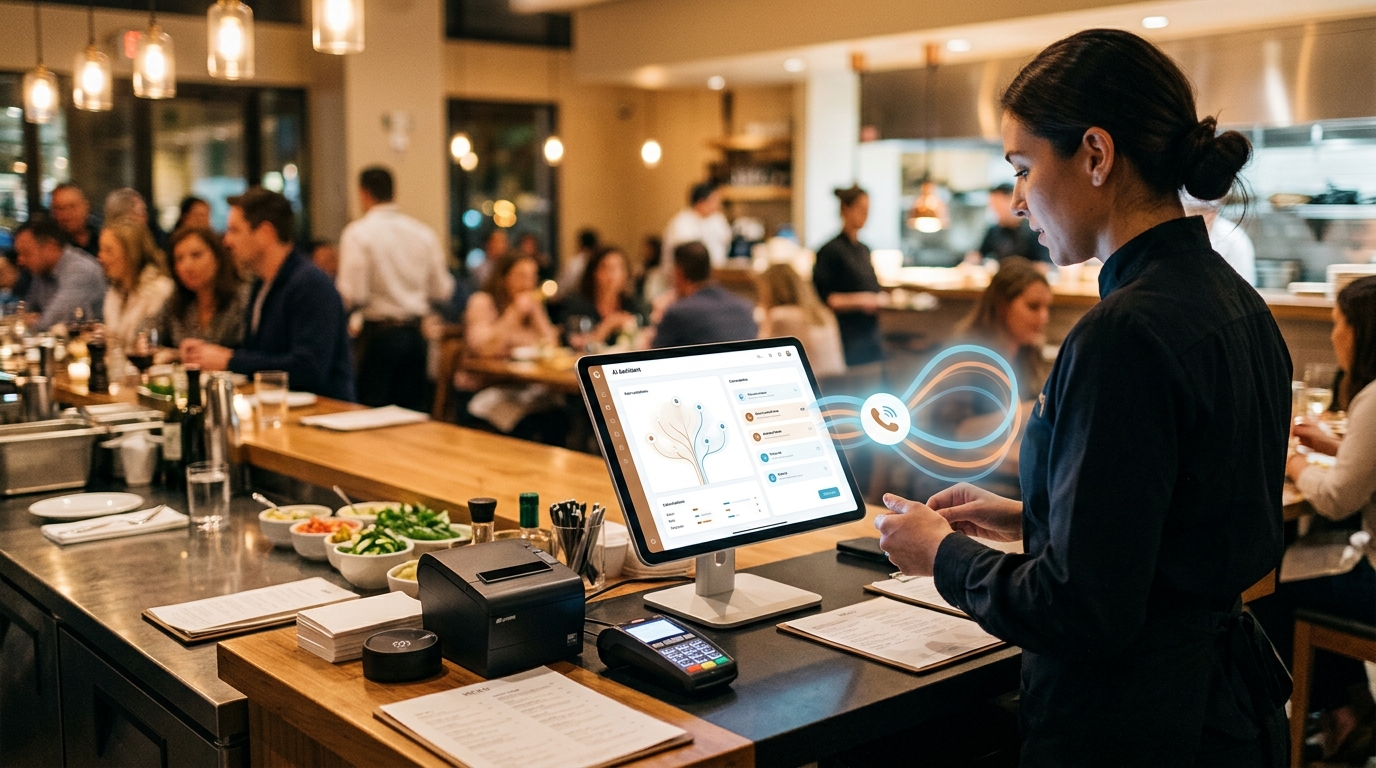
Quick answer: Maple is an AI phone agent for restaurants. It answers calls, responds like a trained front-of-house teammate, captures order and guest details, and routes the right information back into the restaurant workflow so staff can focus on guests in the building.
Restaurant phones are still one of the highest-intent channels in hospitality. Guests call when they want to place an order, check hours, ask about catering, modify a reservation, or reach a manager. The problem is that those calls often arrive during rushes, staffing gaps, or after-hours windows when the team cannot pick up quickly.
Maple is designed for that exact operating reality: keep the phone channel open without asking restaurants to add more front-of-house labor.
What Maple does
Maple acts as a restaurant-specific AI phone agent. Instead of sending callers to voicemail or putting them on hold, Maple can answer in a natural voice, understand the reason for the call, and complete the next best step based on how the restaurant is configured.
- Answers calls automatically during rushes, off-hours, and staffing gaps.
- Handles common guest questions such as hours, location, menu availability, order status, and policies.
- Captures phone orders and high-value requests like catering or large-party inquiries when those workflows are enabled.
- Supports restaurant operations by sending structured call information to the systems and team members that need it.
- Provides visibility through call records, summaries, and outcomes so operators can see what guests are asking for.
How Maple works
Maple is built around a simple restaurant phone workflow:
- A guest calls the restaurant. Maple can answer when the team is busy, when a call rolls over, or when the restaurant wants AI to cover all inbound calls.
- The AI identifies intent. Maple listens for what the caller needs: ordering, menu questions, catering, directions, hours, reservation details, or a handoff to the restaurant.
- The conversation follows restaurant rules. Maple uses the restaurant's configured menu, policies, escalation paths, and integrations so answers match the actual operation.
- The right output is created. Depending on setup, Maple can capture an order, summarize a call, pass along a lead, notify the team, or send information into connected systems.
- The operator gets a record. Managers can review what happened without relying on memory, voicemail, or handwritten notes.
Why restaurants use an AI phone agent
The phone channel is easy to underestimate because missed calls are invisible. A guest who hangs up may order from a competitor, abandon a catering request, or decide not to ask a high-value question. Maple helps restaurants protect that demand without pulling staff away from guests who are already on-site.
1. Fewer missed calls
Maple can pick up when the team cannot. That matters most during lunch rushes, dinner rushes, and weekends, when guest demand and staff workload peak at the same time.
2. More consistent guest experiences
Every call can follow the same approved answers, tone, and escalation rules. That consistency is hard to maintain when new staff, rush pressure, or loud dining rooms are involved.
3. Better front-of-house focus
Instead of asking hosts, cashiers, or managers to stop mid-task for repetitive phone calls, Maple can cover routine conversations and leave the team free to serve guests in person.
4. Cleaner follow-through
Calls become structured records instead of scattered voicemails. That makes it easier to review demand, spot recurring questions, and follow up on catering or operational requests.
What makes Maple different from a generic answering service?
Generic answering services are usually built to take messages. Maple is built for restaurant workflows. That means the conversation needs to understand menus, modifiers, store hours, service windows, routing rules, order context, and the urgency of live restaurant operations.
Maple also gives operators a scalable way to manage phone demand without turning the guest experience into a phone tree. The goal is not just to say "someone answered." The goal is to resolve the call accurately and move the restaurant forward.
Where Maple fits best
Maple is especially useful for restaurants that receive meaningful phone volume and want to protect revenue without adding more labor to every shift.
- High-volume quick-service and fast-casual restaurants
- Pizza, takeout, and delivery-heavy concepts
- Multi-location restaurant groups that need consistency across stores
- Restaurants with catering, large orders, or frequent menu questions
- Teams that miss calls during peak hours or after closing
How to evaluate Maple or any restaurant AI phone system
Before choosing an AI phone agent, restaurant operators should ask practical questions:
- Can it understand real restaurant callers in noisy conditions?
- Can it follow my menu, policies, hours, and escalation rules?
- Can it integrate with the systems my team already uses?
- Can managers review calls, outcomes, and missed demand?
- Does it improve guest experience without creating more work for staff?
Maple is designed around those questions. It gives restaurants an AI phone layer that is operational, measurable, and built around the way guests actually call restaurants.
FAQ
What is Maple?
Maple is an AI phone agent for restaurants. It answers inbound calls, helps guests with common requests, captures useful information, and supports restaurant workflows such as ordering, follow-up, and call review depending on the setup.
Is Maple an answering service or an ordering system?
Maple is more than a message-taking answering service. It is a restaurant AI phone agent that can answer questions, capture structured details, and support phone ordering workflows when enabled.
Does Maple replace restaurant staff?
No. Maple is designed to handle repetitive or overflow phone conversations so staff can focus on guests, food quality, and in-store service. It works as an operational layer around the team, not as a replacement for hospitality.
Can Maple help with missed calls?
Yes. Maple can answer when staff are busy, after hours, or when a restaurant chooses to route inbound calls to the AI agent. That helps reduce lost demand from guests who would otherwise hang up or reach voicemail.
Who is Maple best for?
Maple is a strong fit for restaurants and multi-location groups with meaningful phone volume, especially takeout-heavy concepts, pizza shops, fast-casual brands, and operators that want more consistent phone coverage.
Experience Maple's Voice AI to see how an AI phone agent can fit into your restaurant operation.
Evaluate Maple for your restaurant
Compare Voice and Pro pricing · Check your POS integration · Read customer stories
Want Maple answering every call?
Get a free demo